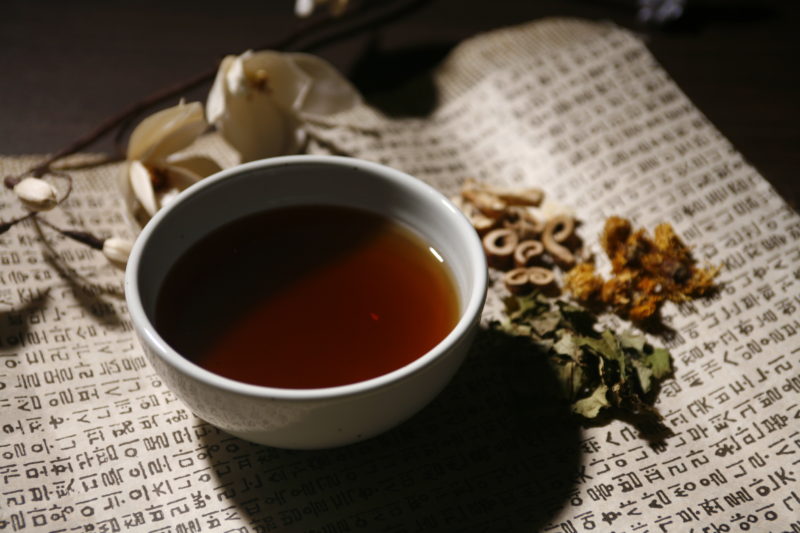
A Korean herbal diet for rhinitis
Three Korean kitchen recipes — pear-and-doraji soup, schisandra tea, and steamed mulberry-bark broth — for the seasonal weeks when rhinitis cycles back.
2026-01-19 · 7 min read
Rhinitis is a seasonal organ as much as a tissue one. Korean medicine treats spring and autumn as the two windows when the upper airway is most exposed, and offers a kitchen-side protocol that has not changed much in two centuries.
Pear-and-doraji soup
Steam a halved Korean pear with two tablespoons of dried platycodon (doraji) root and a small spoon of honey for 30 minutes. Eat warm in the evening, two or three times a week through the early-spring weeks.
Pear is a traditional Korean lung-cooling food; doraji is the upper-airway demulcent.
Schisandra tea
Steep one teaspoon of dried Schisandra berries in 300 ml hot water for 5 minutes. Drink warm, not hot, between meals.
Schisandra is in the Pyunkang-Hwan formula because of its long Korean medicine history as an upper-airway astringent — useful for rhinitis that comes with a thin watery discharge.
Mulberry-bark broth
A traditional autumn broth. Simmer 10 g of dried mulberry root bark with a thumb of fresh ginger in 1 L of water for 20 minutes. Strain. Sip warm through the afternoon.
This is the broth Korean grandmothers reach for when the autumn dryness arrives.
Cycle pairing and timing
You don’t need to make all three recipes at once. A practical rhythm: pear-and-doraji soup in early spring (3 weeks before pollen season); schisandra tea as a long-term between-seasons habit; mulberry-bark broth in dry autumn (September–November).
Aim for at least 6 consecutive weeks per cycle, so the upper airway has time to register the change in reactivity. The most common feedback is something like “this spring didn’t feel as harsh as last year” — that’s how the kitchen-side protocol does its work.
Three small daily details for rhinitis
Detail 1: 30 minutes before going out, rinse the nose with warm saline. Even 5 ml is better than skipping it.
Detail 2: change out of outdoor clothing immediately when you come home, so pollen and dust mites don’t end up on the sofa or bed.
Detail 3: a cup of warm water (no ice, no sugar) with a few slices of fresh ginger before bed. It gives the nighttime airway a steadier humidity and temperature.
None of these replace medical care; they tighten the daily details so the food therapy and formula have a cleaner environment to work in.
Advanced recipes: Platycodon-pollock stir-fry + Kudzu-Angelica tea
**Platycodon-pollock stir-fry (도라지 황태볶음):** a traditional Korean side dish. Soak 100 g dried platycodon root for 4 hours and slice; shred 80 g dried pollock; 1 tbsp gochujang; 1 tsp minced garlic; 1 tbsp sesame oil; sesame seeds to taste. Mix all ingredients and stir-fry over low heat for 5 minutes. An autumn-winter home banchan, served with rice or as a drinking accompaniment.
**Kudzu-Angelica tea:** 10 g dried kudzu slices, 5 g Angelica dahurica root, 3 jujubes, 3 slices of fresh ginger; simmer in 800 ml of water for 25 minutes, strain, and drink warm. The *Bencao Gangmu* records: "Kudzu, cool in nature, level in qi, sweet in flavour; clears heat, descends fire, dispels toxins, induces sweat to expel wind." Angelica dahurica "disperses wind, removes damp, opens orifices, stops pain." The pairing is a traditional Korean home formula for recurrent nasal congestion and sinusitis, taken 2–3 times a week.
The kitchen and the formula, working together
Pyunkang-Hwan brings these botanicals — Platycodon, Schisandra, Mulberry — into a single daily dose, when the kitchen-side protocol cannot keep up.
Continue reading
Three traditional foods for lung-clearing
The first of Dr. Seo's ten public lectures introduces the three medicinal foods that anchor the Pyunkang-Hwan formula — Platycodon root, Mulberry bark, and Houttuynia.
Diet · SkinFoods for clear skin · the Korean medicine view
Korean medicine has a clear, unfashionable view about food and skin. Sugar, dairy, and alcohol cycle the inner mucosa; warm root vegetables and gentle proteins calm it.