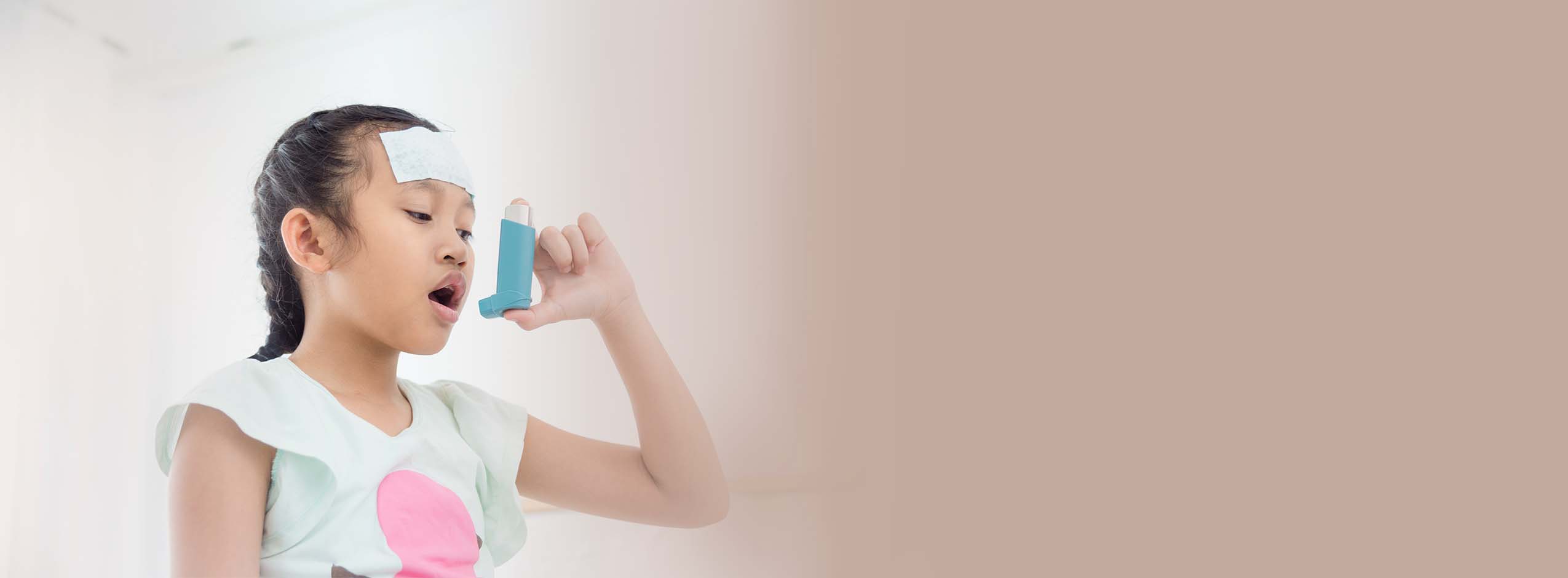
Breathing with Ease · From Asthma to Daily Life
How Korean medicine thinks about shortness of breath
We breathe tens of thousands of times a day and only notice it when something gets in the way. Asthma, chronic cough, exercise-induced shortness of breath, nighttime cough — these are different states of the same system. This article combines Dr. Seo’s 50 years of clinical observation with modern respiratory medicine to discuss the long-term thinking behind clearing and supporting the lungs.
Three layers of asthma
Layer 1 — acute attacks: bronchial smooth-muscle spasm and mucus plugging. This is ER territory, requiring bronchodilators and corticosteroids. Layer 2 — chronic inflammation: even between attacks, the airways carry low-grade inflammation and remodelling. Layer 3 — the constitutional baseline: each person’s lung-function baseline, allergic predisposition, and autonomic tone — this is the layer addressed by long-term care. Pyunkang-Hwan does not address Layer 1; it aims to give the lungs a better internal environment at Layers 2 and 3.
Why “clearing the lung”
“Clearing the lung” in Korean medicine isn’t the Western idea of antibacterial action. It refers to clearing accumulated phlegm-damp, heat, and stagnation — concepts that map onto modern findings of retained airway secretions, chronic inflammation, and pre-fibrotic change. As these settle, the lung’s overall function tends to improve, and the frequency and intensity of asthma episodes often decrease over time.
How Pyunkang-Hwan fits alongside existing treatment
Pyunkang-Hwan is not a replacement for asthma medication. If you are on a controller inhaler (ICS, LABA), please continue it, and let your pulmonologist know you are taking Pyunkang-Hwan so they can factor it in when adjusting your regimen. The most common use case our customers describe is: “my asthma is well-controlled, I just want to support my baseline” — that’s where Pyunkang-Hwan fits.
Recognising the early signals of asthma
Many cases of asthma start as mild symptoms that get mistaken for a lingering cold. Early signals include: a nighttime cough lasting more than 3 weeks (especially around 3–5 a.m.); shortness of breath after exercise or strong emotion; coughing after laughing; cough lasting unusually long after an upper-respiratory infection (more than 4 weeks); a wheezing or whistling sound when you breathe. If any of these persist beyond 2 weeks, ask a pulmonologist for spirometry rather than waiting for an ER visit. Early diagnosis is the single most important factor in long-term control.
Korean home traditions that support breathing
Platycodon honey: thinly slice platycodon root, layer with honey at a 1:2 ratio for 2 weeks; take 1 teaspoon morning and evening with warm water. Common in autumn and winter. Korean pear with lily bulb and white fungus: simmer 1 chopped Korean pear, 10 g of dried lily bulb, 1 piece of soaked white fungus, and a little rock sugar over low heat for 30 minutes. Especially suited to dry or nighttime cough. Schisandra honey tea: steep 5 g of dried schisandra in boiling water for 10 minutes, add honey, sip warm. Helps with exercise-induced shortness of breath. Perilla salad: thinly slice fresh perilla leaves; toss with soy sauce, sesame oil, minced garlic, and chili — a home-style autumn side dish at Korean dinner tables. The Bencao Huiyan describes perilla as having qi-moving, blood-harmonising, and warming properties; it remains a traditional culinary support for respiratory comfort. These are everyday inner support — not substitutes for inhalers or other acute care.
When to seek emergency care immediately
The following are danger signals of an acute attack — use your rescue inhaler and head to the ER: difficulty completing a sentence, blue lips or nail beds, no improvement within 15 minutes of using a rescue inhaler, heart rate above 120 / minute, the feeling that your chest is being crushed and you cannot breathe. Pyunkang-Hwan and any long-term care plan do not address this layer — please stabilise the acute event first before discussing long-term support.
Common questions on this topic
I’m on a bronchodilator — can I still take Pyunkang-Hwan?
Yes. The mechanisms are different. Please tell your pulmonologist you are taking Pyunkang-Hwan so they can factor it into any decisions about adjusting your regimen.
Can it cure asthma?
We don’t use the word “cure.” Asthma is a chronic condition, and the medical consensus is to control it rather than cure it. Pyunkang-Hwan’s role is to support the overall state of the lungs as part of long-term care.